
I Nearly Lost My Sight... The Symptoms I Wish Everyone Knew
Two days before I was due to fly to Madeira for a long-awaited holiday, my eye decided it had other plans.
As if packing, finding passports and checking the weather forecast wasn't enough!
I suddenly noticed flashing lights in one eye. A short time later, what looked like a cobweb drifted across my vision.
There was no pain.
In fact, I was driving when it happened.
My first thought certainly wasn't, "I wonder if this is a retinal tear?"
It was, "What on earth is stuck on my glasses?"
Thankfully, I sought help immediately. I was seen as an emergency, diagnosed with a retinal tear and had laser treatment that very same day. Amazingly, I was still able to fly to Madeira and enjoy my holiday.
The experience made me realise just how many people—including me—don't know the warning signs of a retinal tear.
Recognising the symptoms early can literally save your sight.
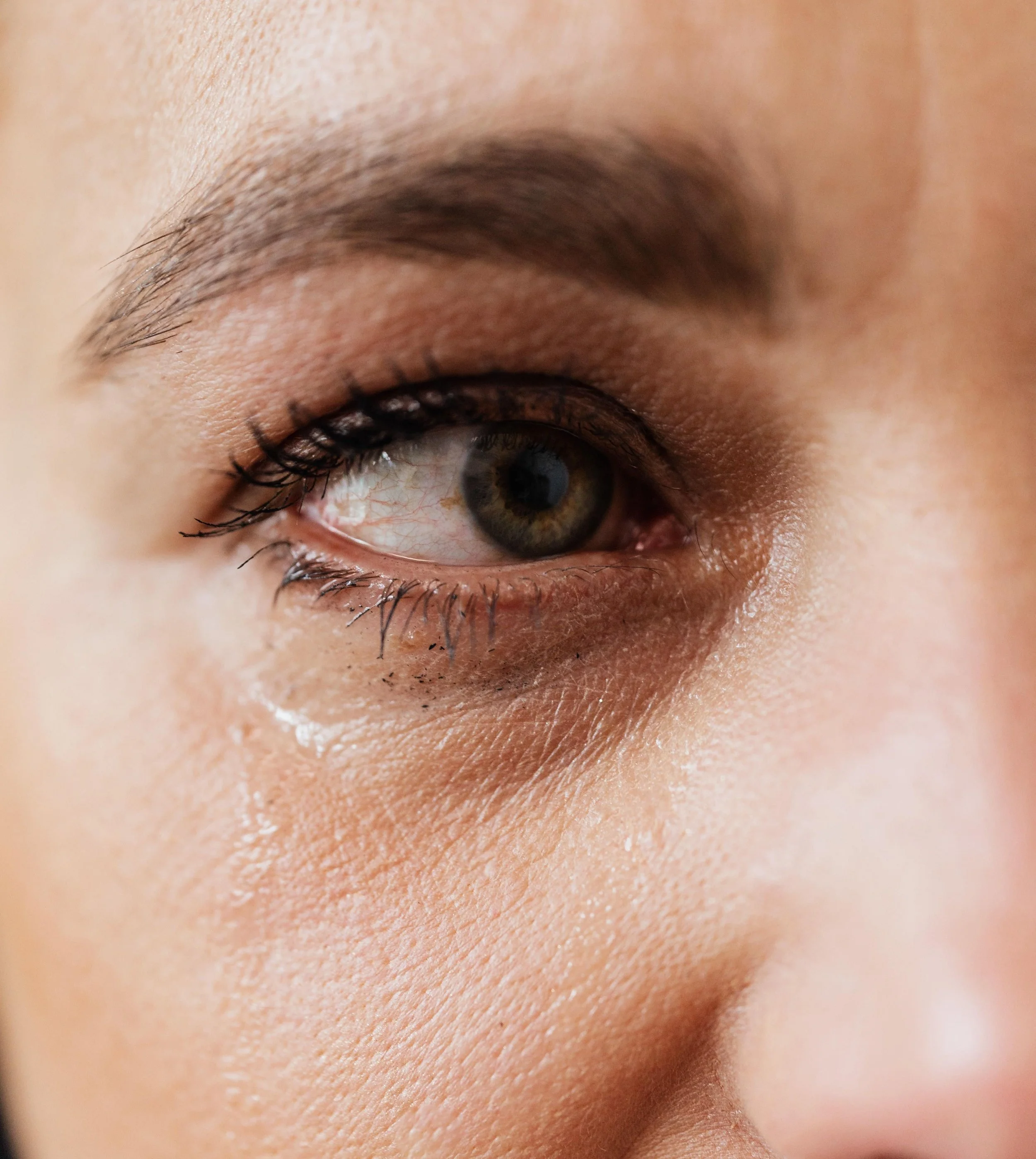
What is a retinal tear?
A retinal tear is a small tear in the retina, the thin layer of light-sensitive tissue at the back of your eye that sends visual information to your brain.
Think of the retina as the camera sensor inside your phone or camera. Without it, you can't produce a clear image.
As we get older, the jelly-like substance inside the eye (called the vitreous) naturally changes. Sometimes it pulls away from the retina. Most of the time this happens without causing problems, but occasionally the pull is strong enough to create a retinal tear.
The tear itself is usually painless, making it easy to ignore the symptoms.
What is the difference between a retinal tear and a retinal detachment?
People often use these terms interchangeably, but they are different.
A retinal tear is a small break in the retina.
A retinal detachment happens when fluid passes through that tear and lifts the retina away from the back of the eye.
A retinal detachment is a medical emergency because the retina can no longer function properly once it separates from the back of the eye.
The good news is that treating a retinal tear early can often prevent a retinal detachment from developing.
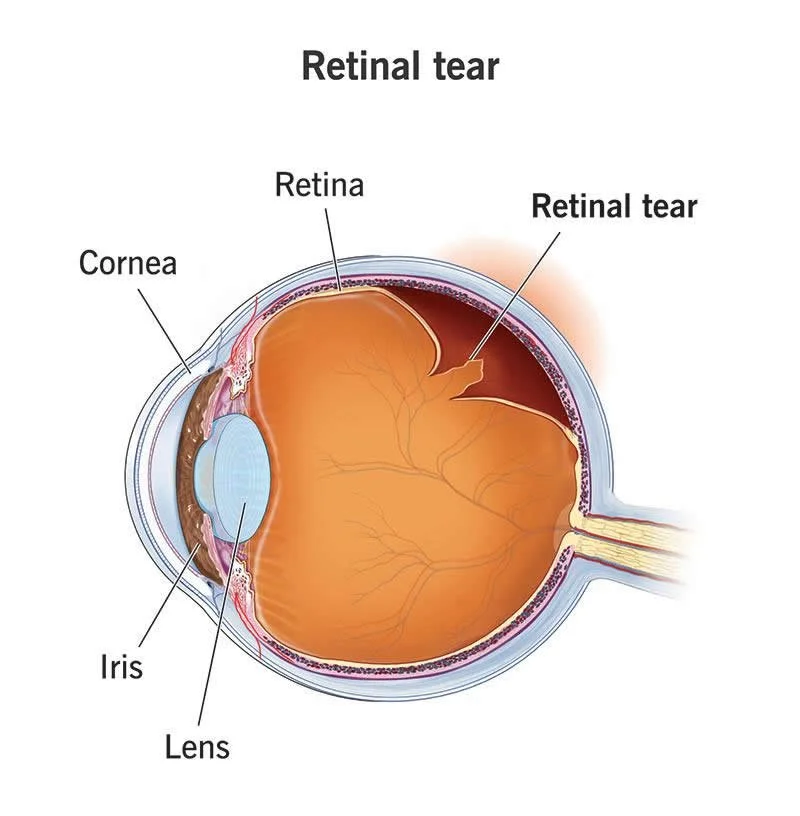
Image from Wockr
Symptoms of a retinal tear
There are three symptoms that should never be ignored:
Sudden flashes of light, especially in your peripheral vision.
A sudden increase in floaters that may look like dots, cobwebs, threads or specks.
A curtain, shadow or veil moving across your vision.
That final symptom—the veil—is exactly what happened to me.
If you notice any of these symptoms, seek urgent medical assessment.
Who is at risk of a retinal tear?
Although retinal tears can happen to anyone, your risk increases if you:
Are over 50
Are very short-sighted (myopia)
Have had cataract surgery
Have had a previous retinal tear or retinal detachment
Have a family history of retinal detachment
Have experienced an eye injury
Have certain eye conditions
Age-related changes in the vitreous (known as a posterior vitreous detachment or PVD) are one of the most common causes.
How is a retinal tear treated?
If diagnosed early, a retinal tear can often be treated using laser therapy.
The laser creates tiny scars around the tear, sealing it and helping prevent it from progressing to a retinal detachment.
Treatment usually:
Takes less than 30 minutes
Is performed under local anaesthetic
Allows you to go home the same day
Speaking from experience, the laser treatment itself was far less dramatic than my journey to hospital in full holiday-panic mode!
If the retina has already detached, surgery becomes much more complex.
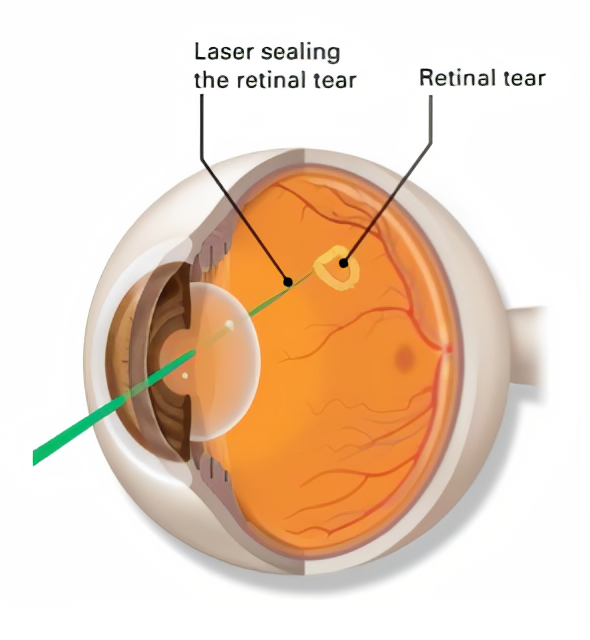
Image from the American Academy of Ophthalmology
How can you protect your eye health?
This experience has made me think differently about eye health.
We all remember to apply SPF to our skin.
But how often do we think about protecting our eyes?
I've since invested in sunglasses with 100% UVA and UVB protection and deliberately chose larger frames to provide more coverage.
Think of sunglasses as SPF for your eyes.
Good-quality sunglasses don't just make you look good—they help protect your eyes from long-term UV damage, including cataracts and other eye conditions.
My biggest takeaway
I work in women's health, but this experience reminded me that health awareness extends far beyond hormones.
One of the biggest surprises?
There was absolutely no pain.
If I hadn't recognised that something wasn't right and sought help immediately, my story could have been very different.
If you remember just three symptoms from this article, make them these:
✅ Flashes of light
✅ A sudden increase in floaters
✅ A curtain, shadow or veil across your vision
If they appear suddenly, don't ignore them.
Getting checked quickly could save your sight.
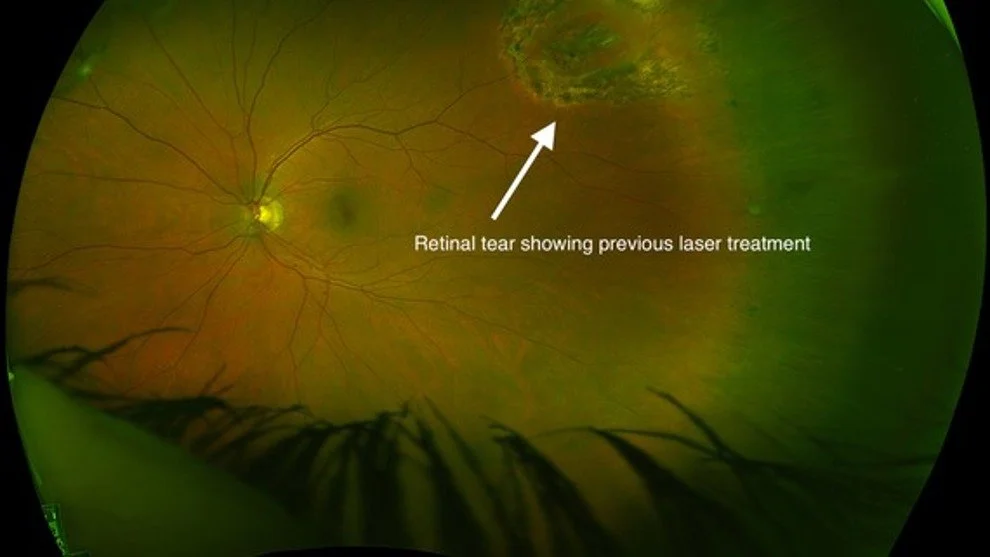
Image from Hull Retina Surgeon.
Frequently Asked Questions
Is a retinal tear painful?
No. Most retinal tears are painless, which is why recognising the visual symptoms is so important.
Can a retinal tear heal by itself?
No. Retinal tears require assessment by an eye specialist. Early treatment with laser therapy can often prevent a retinal detachment.
Can menopause cause retinal tears?
No. Menopause does not cause retinal tears. However, menopause is associated with dry eye disease due to falling oestrogen levels, which is a separate condition.
Are flashes and floaters always serious?
Not always. Floaters can become more common with age, but a sudden increase in floaters, flashes of light or a curtain across your vision should always be assessed urgently.