
Alcohol and Menopause - Why It Can Suddenly Feel Different
My body definitely handled alcohol much better in my 20s than it does now, that is for sure.
And I know I’m not on my own with that.
Alcohol can suddenly feel very different during perimenopause and menopause. What used to be absolutely grand can now mean broken sleep, a 3am wake-up, feeling hotter, more anxious, and a bit off the next day.
That can come as a real shock, especially when you have not changed much — but your body clearly has.
Women will often say to me:
“I only had a couple of glasses.”
And yet the next day they feel like a bus hit them.
Sleep wrecked. Anxiety up. Night sweats worse. Energy on the floor.
There is a reason for that.

Alcohol and Sleep
Alcohol may make you feel sleepy at first, which is why many people associate it with relaxing or winding down. While it might help you fall asleep more quickly, it can really disrupt your sleep later in the night.
So even if you get off to sleep easily, the quality of that sleep is often poorer.
When sleep is already a challenge in perimenopause and menopause, that is no small thing.
Many women notice more frequent waking, lighter sleep, early-morning waking, or that horrible 3am wide-awake feeling after drinking. Even a small amount can be enough to affect how rested you feel the next day.
Alcohol, Hot Flushes and Night Sweats
Alcohol can also make hot flushes and night sweats worse for some women.
It is dehydrating too, and when you're dehydrated, you feel more tired, headachy, foggy, and just less able for life.
If you already struggle with temperature changes, broken sleep, or night sweats, alcohol can sometimes add another layer to that.
Not for everyone. But definitely for some.
The important thing is to notice your own patterns.
The Anxiety Piece
Many women notice their mood is lower or their anxiety is much worse after drinking, even if it is only a small amount.
You might enjoy the glass of wine in the evening, but then wake in the early hours with your heart racing, your mind busy, or that awful sense of unease that seems to come from nowhere.
And when hormones are already fluctuating, sleep is patchy and stress is high, alcohol can tip things over the edge.
This does not mean you have done anything wrong. It just means your nervous system may be more sensitive than it used to be.

Alcohol and Weight
Yes, alcohol can impact weight too.
This is not just about the calories in the drink itself, though they can add up quickly. Alcohol can also affect blood sugar, appetite, sleep, and the food choices we make the next day.
Poor sleep usually means more cravings, less energy, and often less motivation to move.
So it can become a bit of a domino effect.
A few drinks, a poor night’s sleep, more cravings the next day, less energy, less movement, and then frustration when weight feels harder to manage.
I think this is why so many women feel they are being “good” during the week and still not seeing the progress they expected.
It is rarely just one thing. It is often the knock-on effect.
Getting Clear on What You Are Drinking
One thing that can be really helpful is simply getting clearer on what you are actually drinking.
Drinkaware has a drinks calculator where you can pop in what you drink over a week and it will show you the amount of pure alcohol, plus calories, sugar, cost and how it compares with the HSE low-risk weekly guidelines.
It can be a real eye-opener.
Very often, what feels like “not that much” looks different when you see it written down.
And again, this is not about judgement. It is about awareness.
This Is Not About Giving Up Everything
Now, this is not me telling you never to drink again.
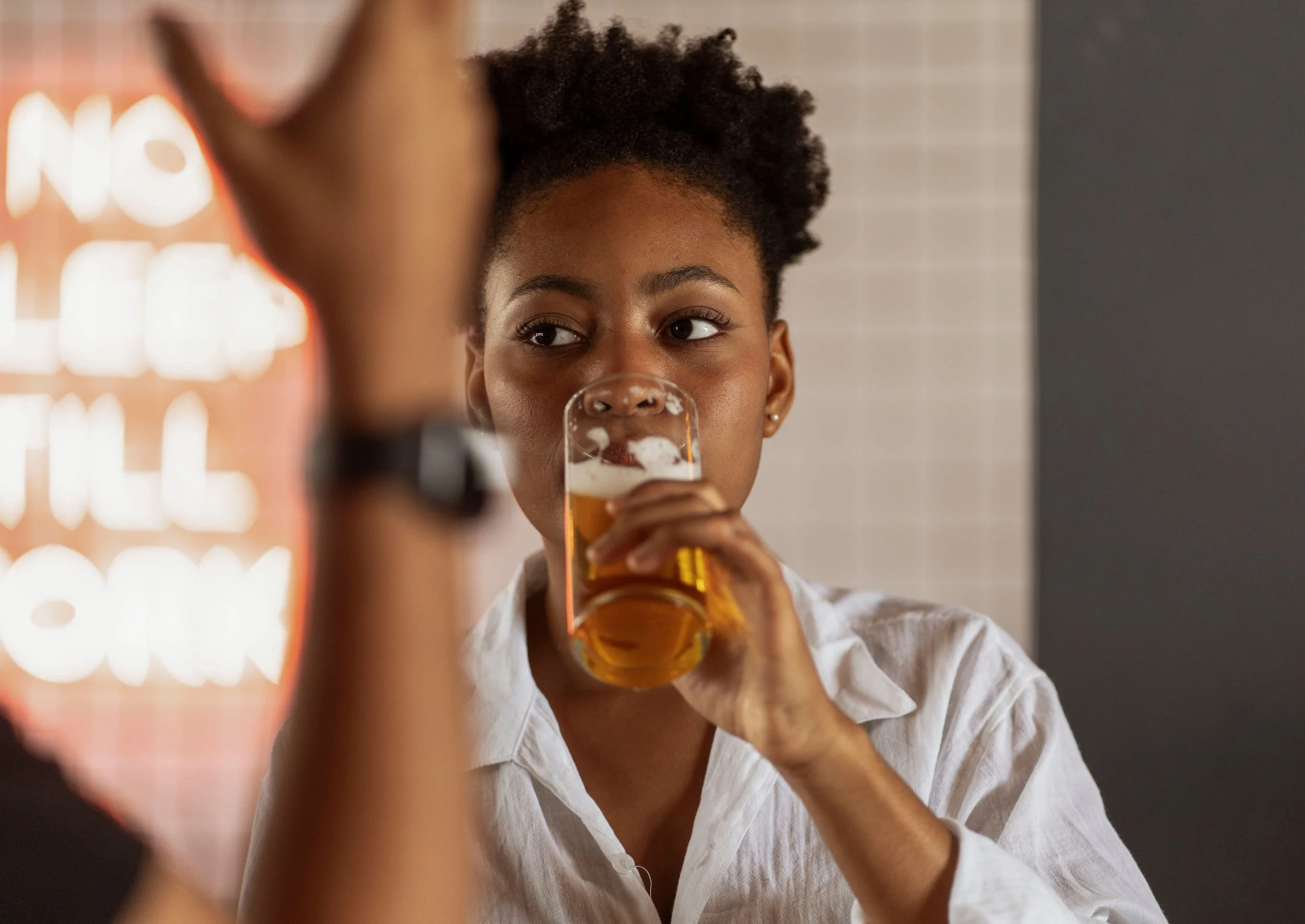
It is just about noticing that in menopause, alcohol can affect us very differently, and sometimes more than we realise.
For some women, cutting back a little can make a big difference.
Better sleep. Less anxiety. Fewer night sweats. A steadier mood. And sometimes a little more ease around weight too.
For others, it might be about changing when they drink, how much they drink, or what they drink.
The key is paying attention to what your body is telling you now, rather than assuming it will respond the way it did 10 or 20 years ago.
Alcohol Alternatives That Still Feel Like a Treat
If you are trying to cut back, I always think it helps to have alternatives you actually enjoy.
Otherwise, it feels miserable, and life is too short for that.
A few ideas:
Sparkling water with lime, lemon, or berries
A good alcohol-free beer or wine
Kombucha, if it suits you
A mocktail in a proper glass
Peppermint or herbal tea in the evening
A lovely alcohol-free drink served in your favourite glass
Basically, it needs to be something that still feels like a treat.
If You Do Drink
A few simple things may help:
Eat before you drink
Drink water alongside it
Go slower than you used to
Notice how you feel later that night
Pay attention to how you feel the next day
That awareness is powerful.
Because this is not about guilt. It is not about being “good.” It is about understanding your body better and making choices from that place.If You Do Drink
If you do drink, a few simple things may help:
Eat before you drink
Drink water alongside it
Go a bit slower than you used to
Notice how you feel later that night
Pay attention to how you feel the next day
That awareness is powerful.
Because this is not about guilt. It is not about being “good.” It is about understanding your body better and making choices from that place.
A Question Worth Asking
So maybe it is worth asking yourself:
Does alcohol still suit me the way it used to?
Sometimes that one question tells us a lot.
And if you are reading this with a glass in your hand, please, no guilt.
This is not about perfection. It is about being informed, listening to your body, and finding what works for you now.
Everything in moderation — and always with a bit of self-kindness.