
Prolapse: The Women’s Health Issue We Really Need to Talk About
Soon I’ll be having surgery for a prolapse.
It’s not exactly small-talk material. Try dropping the word prolapse into a night out and watch how quickly the subject changes. I have one friend who actually covers her ears when I start talking about anything “down under” because it freaks her out so much. I have now officially been banned from giving her any further descriptions of my actual surgery, much to my disappointment. 🤣
But joking aside, this is a VERY important aspect of women’s health, and one we still don’t talk about enough. We talk about hot flushes, brain fog, sleep and anxiety, and thankfully we’re even getting better at talking about vaginal dryness. Prolapse, however, still tends to be whispered about, if it’s mentioned at all, despite how common pelvic floor problems are.
That silence is a problem because too many women ignore the early signs. Many put things like leaking when they cough or laugh, a sudden urge to get to the toilet, or a feeling of heaviness by the end of the day down to having children, getting older or simply menopause. We tell ourselves it isn’t bad enough to bother anyone about, so we buy the pads, work out where the nearest toilets are and carry on. At this point, I could probably give a TED Talk on toilet locations within a 10-mile radius of my house.
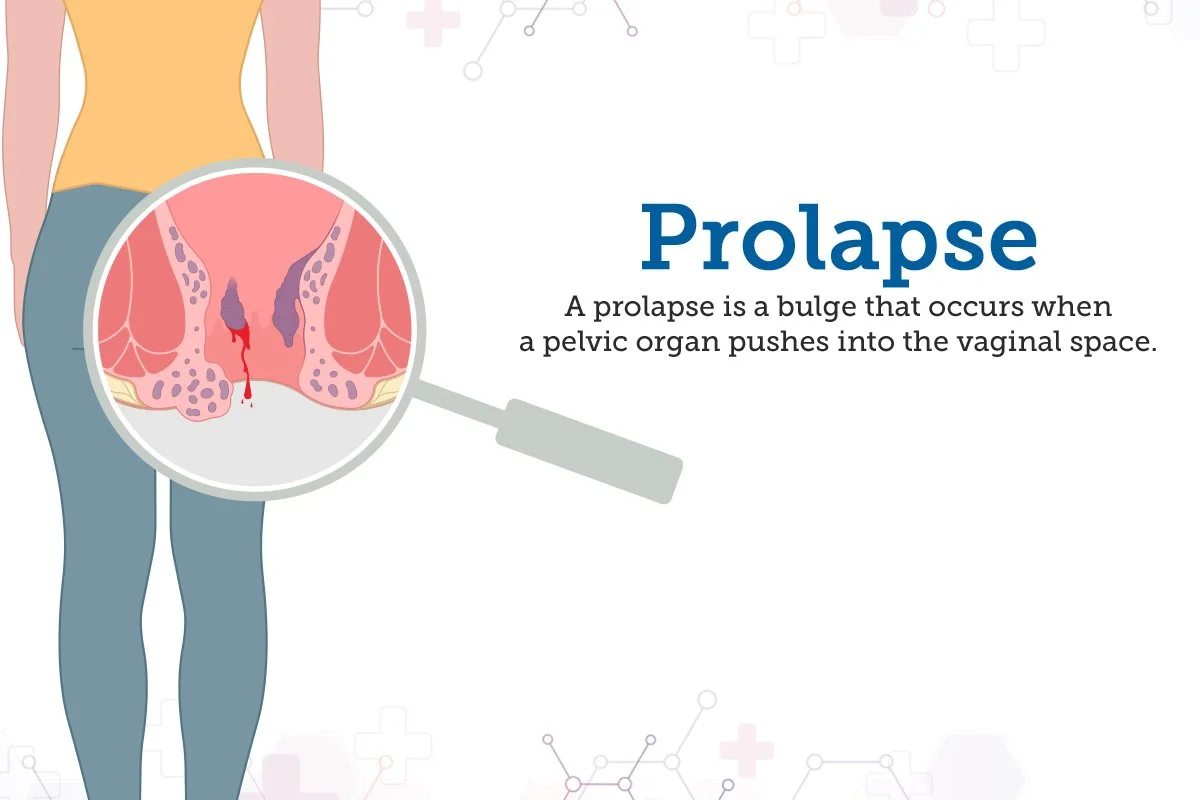
Image from Lybrate.com
What is a prolapse?
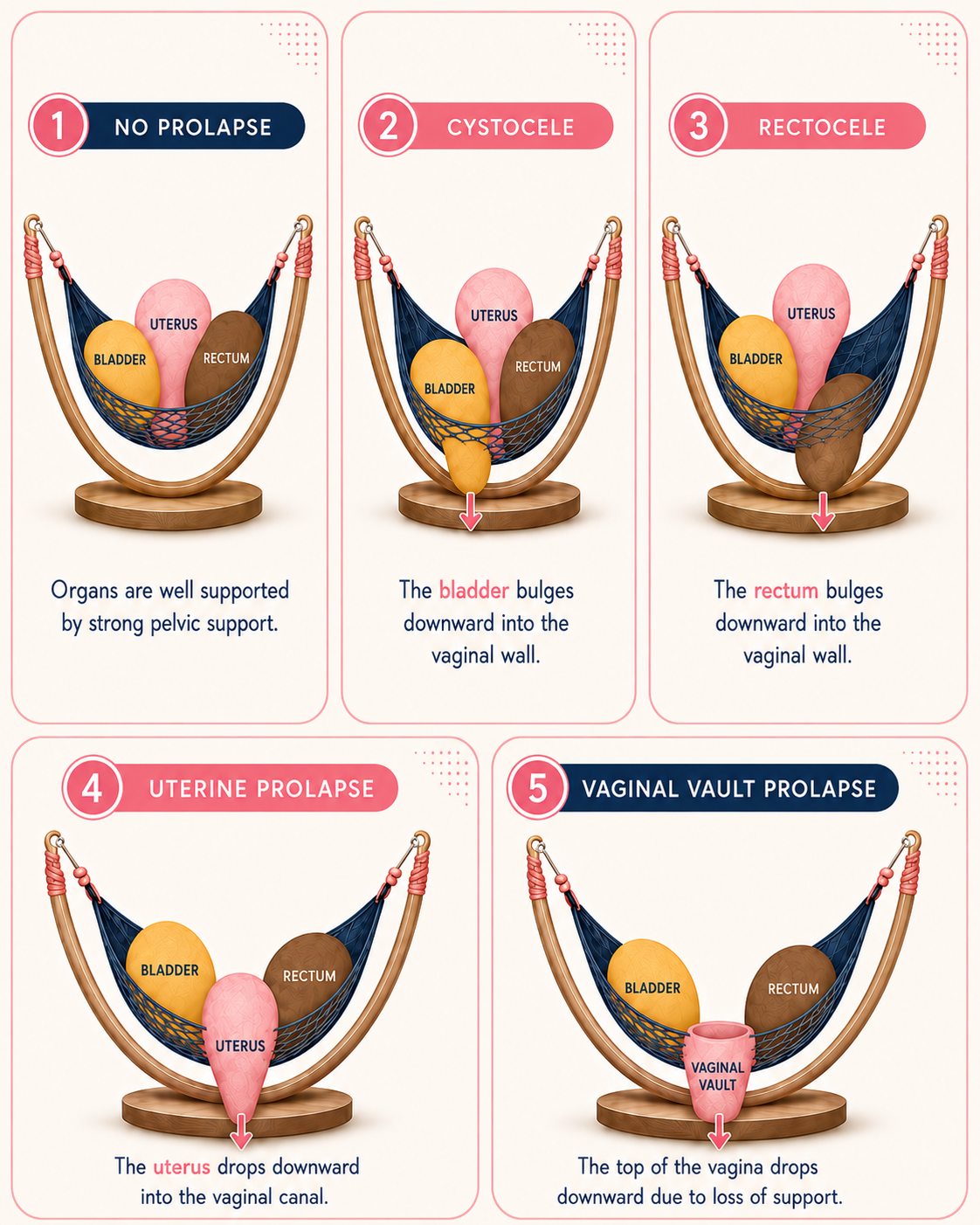
A prolapse happens when the muscles and connective tissues supporting the pelvic organs weaken or stretch. I tend to think of the pelvic floor as a hammock supporting the bladder, bowel and uterus. If that support weakens, one or more of those organs can begin to drop down and bulge into the vagina.
There are several different types. A bladder prolapses, or cystocele, happens when the bladder bulges into the front wall of the vagina. A rectocele occurs when the rectum pushes into the back wall. A uterine prolapse is when the uterus descends, while women who have had a hysterectomy can develop a vaginal vault prolapse, where the top of the vagina loses support. It is also possible to have more than one type at the same time.
The early signs worth knowing about
Symptoms can include leaking urine when coughing, laughing, sneezing, exercising or lifting something heavy, as well as a sudden and strong urge to urinate that makes it difficult to reach the toilet in time. Some women notice pressure, heaviness or a dragging sensation in the pelvis, difficulty emptying the bladder, constipation, a feeling that the bowel hasn’t fully emptied, or changes in bowel control, including difficulty controlling wind.
As prolapse progresses, some women may also feel or see a bulge at the vaginal opening.
One thing I really want to emphasise is that these symptoms do not automatically mean you have a prolapse. Bladder leaks, urgency, pelvic heaviness and changes in bowel function can all have several different causes. An overactive bladder, urinary tract infections, constipation, pelvic floor muscle dysfunction, vaginal changes associated with menopause and other pelvic health conditions can produce very similar symptoms.
That is exactly why it is so important not to self-diagnose or simply put up with them. A proper assessment helps you understand what is actually causing your symptoms and, more importantly, what can be done about them.
Why I decided to be proactive
One of the reasons I’m so passionate about talking about this is because prolapse can progress. For some women, it eventually reaches the point where they can feel or see a bulge at the vaginal opening. In more advanced cases, part of the prolapse can protrude outside the vagina, and some women find themselves having to gently push the bulge back inside so they can empty their bladder, open their bowels or simply feel more comfortable.
I have heard versions of this story so many times from women over the years, and I think that was a big part of why I became so proactive with my own pelvic health. Hearing what other women had experienced made me very aware of what I didn’t want to happen, and I wanted to do everything I could to prevent things progressing to that stage.
When I shared a reel recently about my own prolapse, I got a huge response. In a poll, 87% of those responding said they were experiencing symptoms, yet so many had never spoken openly about them. So, if this is something you’re dealing with, please know you are far from alone.
We can spend years telling ourselves that symptoms aren’t serious enough to mention, that they’re simply part of ageing, or that this is the price we pay for having children. Pregnancy and childbirth can absolutely increase the risk but prolapse can also happen in women who have never given birth.
What can help with prolapse?
I also want to reassure you that surgery is not the outcome for everyone. One of the biggest things I’ve learned through my own journey is that there isn’t a one-size-fits-all answer.
For some women, recognising symptoms early and beginning treatment can make a significant difference. Pelvic health physiotherapy can be hugely valuable, and depending on the individual, management may also include pelvic floor muscle training, treating constipation, maintaining a healthy weight, regular movement and exercise, avoiding unnecessary straining, vaginal oestrogen where medically appropriate, or pessary support.
For other women, despite doing all the right things, surgery may eventually become the best option. That certainly doesn’t mean you have failed. Every woman’s body, pregnancy history, menopause journey, connective tissue and pelvic floor are different, which is why an individual assessment is so important.
What about the Emsella chair?
I’m often asked about the Emsella chair, so I wanted to address that here too. Emsella uses high-intensity electromagnetic energy to stimulate pelvic floor muscle contractions, and it is marketed particularly for urinary incontinence and pelvic floor strengthening.
Some women may find it helpful for certain types of urinary incontinence or pelvic floor weakness, but it isn’t a magic fix for prolapse. If the supporting tissues and structures have already stretched significantly, strengthening the muscles alone cannot necessarily restore that structural support.
It may have a role for some women as part of a wider treatment plan, but I would always recommend having a proper pelvic health assessment first so you know exactly what you’re treating rather than simply hoping something will work.
Choosing my surgeon
Once I realised surgery was likely to be the right option for me, I approached it the same way I approach most things and did my homework. I researched the different procedures, read as much as I could, asked a ridiculous number of questions and, most importantly, found a consultant whose experience and approach gave me confidence.
I wanted someone who specialises in this area, takes the time to explain the options properly and makes decisions with me rather than for me. Choosing a surgeon is a very personal decision, but I do think it is worth taking the time to understand your options, ask plenty of questions and make sure you feel comfortable with the person looking after you. Your GP and pelvic health physiotherapist can also be very helpful in guiding you through that process.

A note to my younger self: look after your bowel health
If there is one thing I could go back and tell my 20- or 30-year-old self, it would be to look after my bowel health. It genuinely was not on my radar at all, and I really wish it had been.
I can’t say definitively that my bowel health caused my prolapse, because pelvic floor problems are rarely that simple, but I do believe years of constipation and straining may have played a role in my own journey. Maybe that was where some of this started for me, who knows? That part is simply my own intuition.
What we do know is that repeated straining increases pressure on the pelvic floor, so if you are regularly constipated, struggling to empty your bowels or needing to strain, please don’t ignore that either. Looking after bowel health is one of the simplest ways we can reduce unnecessary pressure on the pelvic floor, which is why I bang on so much about fibre, hydration, movement, regular bowel habits and responding when your body tells you it is time to go.
Please don’t wait until things get worse
If anything, I’ve described here sounds familiar, speak to your GP or ask about seeing a pelvic health physiotherapist. You are not going to embarrass them, and you certainly do not need to wait until something is physically protruding from the vagina before asking for help. Sorry if that sounds graphic, but this is simply too important to skirt around.
We need to stop treating bladder leaks, urgency, pelvic heaviness and prolapse as embarrassing little problems women should quietly manage. They are health issues, and they deserve proper assessment, treatment and open conversations.
Over the coming weeks, I’ll also be sharing more about my own surgery journey, including how I’m preparing physically and mentally, the questions I’ve asked, what I’m doing before the operation, what I’m packing for hospital and the practical things I’m putting in place for recovery. If you are facing prolapse surgery yourself, or think it may be something you need in the future, I hope sharing my experience makes the whole thing feel a little less daunting.