The UK Is Moving Menopause Towards Workplace Accountability. Ireland Needs to Catch Up.
For years, menopause was a taboo, not spoken of in any setting. Over the last few years menopause has entered the workplace but has largely been treated as a wellbeing issue.
Something for awareness week.
Something for a webinar.
Something that depends on whether an employer happens to be switched on and in tune with what their workplace needs.
And while wellbeing matters, that is no longer enough.
Because what is happening in the UK now points to something bigger.
Menopause is moving closer to workplace accountability. In March 2026, the UK government published guidance for employers on action plans linked to gender pay gap reporting and support for employees experiencing menopause. For the 2026–27 reporting year, employers with 250 or more employees can choose to publish a voluntary action plan. The intention is for that to become mandatory from spring 2027, subject to secondary legislation.
Once something becomes linked to reporting, action planning and visibility, it stops being a “nice to do” and starts becoming something employers are expected to take seriously. That is a real shift. It moves menopause away from being treated as a soft wellbeing topic and closer to being recognised as part of workplace equality, retention and employer responsibility.

What has changed in the UK?
I would have liked to see the UK go further — to name menopause as a protected characteristic and introduce a standalone Menopause Act. That hasn’t happened. But this is still a big step forward. The government guidance now explicitly brings menopause into an employer action-plan framework alongside gender pay gap reporting. That is significant because it places menopause more clearly inside a workplace equality conversation, not just a private health one.
The UK’s Equality and Human Rights Commission had already been moving in this direction. Its employer guidance makes clear that menopause-related issues may engage legal duties under the Equality Act 2010, including sex, age and disability discrimination depending on the circumstances. So these new action plans do not replace existing legal risk. They increase the expectation that employers should act proactively rather than waiting for complaints or tribunal claims.
That, to me, is the most important part.
The direction of travel is clear. Menopause is being moved away from an informal wellbeing conversation and towards a more structured workplace accountability conversation.
Now, this is not perfect.
It applies to larger employers already caught by gender pay gap reporting thresholds. The quality of action plans will vary. And until the mandatory phase arrives and is backed by regulations, much will still depend on how seriously employers choose to take it. But even with those limits, the UK has done something important: it has signalled, at government level, that menopause belongs in the same conversation as employer action, workplace equality and transparency.

Where Ireland stands now
In Ireland, there is still no menopause-specific employment law. That does not mean employees have no protection, because they do. But the protection is indirect.
Workplace issues linked to menopause may fall under existing equality law, particularly sex, age or disability, depending on the circumstances. Alongside that, the Health and Safety Authority is clear that menopause is a workplace issue and its guidance sets out practical measures such as training, workplace adjustments, flexible hours, shift changes, later start times, access to toilets, ventilation and temporary task adjustments where symptoms are affecting work.
There are also important public-sector building blocks already in place. The Civil Service Menopause in the Workplace Policy Framework was published in October 2023 to guide Civil Service organisations in developing menopause policies and workplace supports. The HSE also has a menopause policy and manager guidance in place to support conversations and practical adjustments for staff experiencing menopause-related issues.
All of that is positive.
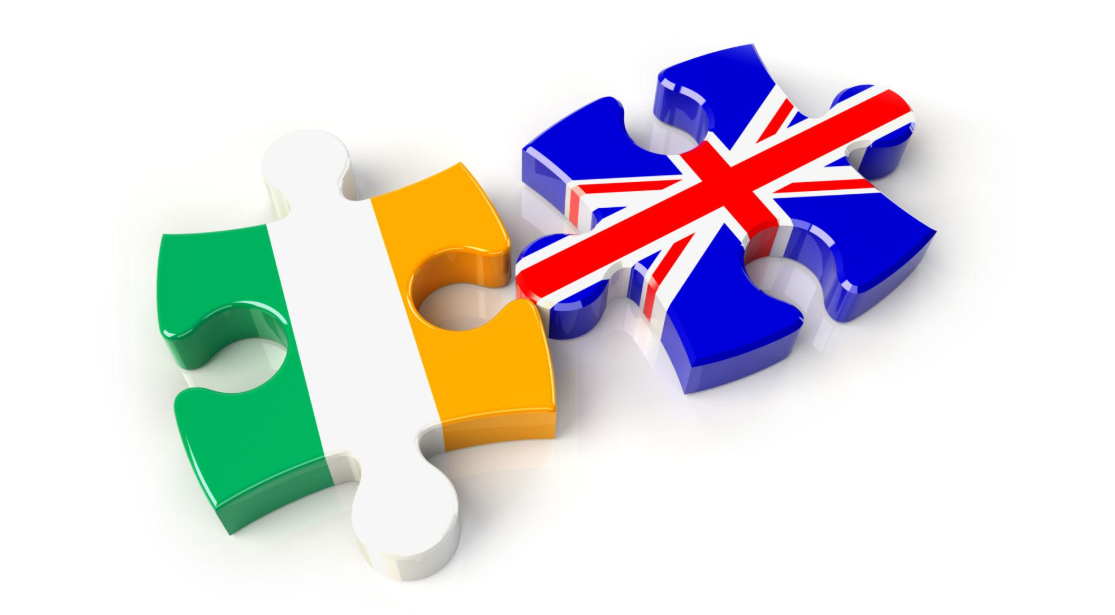
But let’s be honest. These are still pieces of the puzzle.
They are not the same thing as a joined-up national framework that sets clear expectations for employers across Ireland. They do not create a consistent baseline across the private sector. They do not require reporting. And they still leave too much depending on where you work, who manages you, and whether your employer has decided this matters. That is not the same as accountability. Ireland is still relying on guidance and sector-specific policy, rather than a clear national approach to reporting or action planning on menopause.

Why the Irish approach is still not enough
Right now, Ireland’s model still places too much burden on the individual woman.
Too often, support only begins when someone is willing to disclose deeply personal symptoms, explain the impact on work, and hope the manager sitting opposite them knows how to respond well. That is a lot to ask of someone who may already be dealing with poor sleep, anxiety, heavy bleeding, headaches, joint pain, urinary symptoms, palpitations, brain fog or a real drop in confidence.
The legal route may exist on paper. But the lived reality for many women is still silence, minimising, second-guessing themselves and trying to push through. Ireland currently relies on: indirect legal protections, guidance, and employer discretion rather than a clearly named national menopause-at-work framework.
There is another issue too.
Because menopause is not named strongly enough in Ireland’s core workplace framework, employers can still treat it as optional. Some organisations are doing excellent work. Others are doing very little beyond the odd wellbeing talk. That level of inconsistency is exactly what a stronger national framework is meant to reduce. Right now, we are still relying on guidance rather than a universal reporting or action requirement.
And then there is the strategic issue.
Ireland risks falling behind.
Particularly when so many larger employers operate across both Ireland and the UK. As UK employers begin engaging with voluntary action plans now and prepare for likely mandatory action plans from spring 2027, the contrast will become harder to ignore.
What Ireland needs to do next
Ireland does not necessarily need to produce a brand-new standalone menopause law tomorrow morning.
But it does need to stop pretending the current patchwork is enough.
At the very least, Ireland needs a stronger national menopause-at-work framework that brings together equality law, health and safety, workplace adjustments, manager capability and good employment practice in one place. The building blocks already exist through HSA guidance, the Civil Service policy framework and the HSE policy. What is missing is consistency, scale and visibility across the wider workforce.
Ireland should also seriously consider whether menopause needs to be linked more clearly to broader gender equality reporting or employer action planning, particularly in larger organisations and the public sector. That is where the UK has shifted the conversation in a meaningful way. It has connected menopause to workforce equality and employer transparency rather than leaving it sitting vaguely under wellbeing.
We also need to get much more serious about manager training.
Because policies do not support people.
People support people.
And if managers do not understand menopause, do not know how to respond sensitively, or are too afraid of saying the wrong thing, then even the best policy in the world will sit in a drawer gathering dust. That is exactly why the Irish guidance that does exist puts such emphasis on conversations, adjustments and practical supports.

Most of all, Ireland needs to stop treating menopause as niche.
It is not niche.
It is not a side issue.
It is not a soft issue.
It is a workforce, a retention, an equality and a health and safety issue.
And for many women, it is a career progression issue too.
Surely it is a moral issue too - simply the right thing to do.
The UK has not solved everything. But it has moved the conversation forward by making one thing very clear: menopause is not just something employers should be aware of. It is something they are increasingly expected to act on, and to show evidence of acting on.
Ireland now has a choice.
We can continue to rely on fragmented protections, voluntary goodwill and scattered good practice, leaving support to chance.
Or we can decide that menopause deserves a clearer, more coherent and more accountable place in Irish working life.
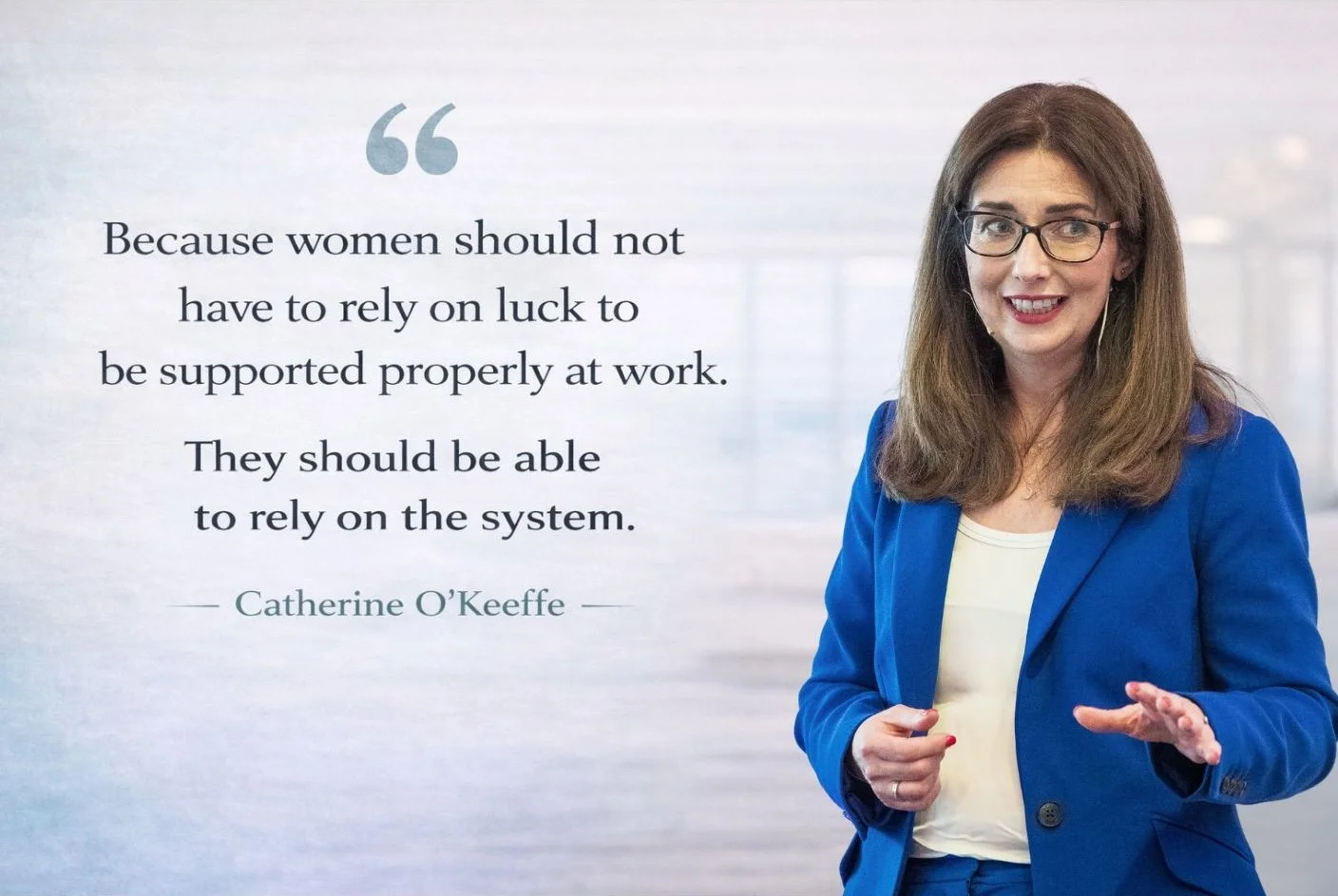
Because women should not have to rely on luck to be supported properly at work.
They should be able to rely on the system.