
Is It Your Thyroid or Your Menopause? Here's How to Tell the Difference
One of the questions I've been asked several times recently is:
"How do I know if it's my thyroid or my menopause?"
It's a brilliant question, and to be honest, it's no wonder so many women are confused because the two can look remarkably alike.
This is actually one of my bugbears. I worry that menopause has become the answer to almost everything. An ache, a pain, a bad night's sleep or a bout of brain fog is quickly labelled as "just menopause". While menopause certainly explains a huge amount, it doesn't explain everything, and these are also the years when other health conditions become more common. One of the biggest is thyroid disease.
The good news is that with the right assessment and blood tests, it's usually possible to work out what's going on.

Why do menopause and thyroid problems feel so similar?
The thyroid is a tiny butterfly-shaped gland that sits at the front of your neck. It's amazing really that something so small can have such a huge influence on how you feel because it helps regulate your metabolism, energy, body temperature, heart rate, digestion and how your brain functions.
When it's not working properly, your whole body notices.
The challenge is that many symptoms of an underactive thyroid overlap with menopause, making it difficult to know which is responsible.
Common symptoms that can occur with both include:
Fatigue
Brain fog
Changes to your menstrual cycle
Anxiety or low mood
Constipation
Weight changes
Dry skin
Thinning hair
Aching muscles and joints
This overlap is exactly why it's so important not to assume every symptom is simply part of menopause.
What should you do if you're unsure?
Rather than trying to work it out yourself, the first step is making sure your thyroid is being managed properly. Once that's under control, it becomes much easier to work out whether any symptoms that remain are more likely to be related to perimenopause or menopause.
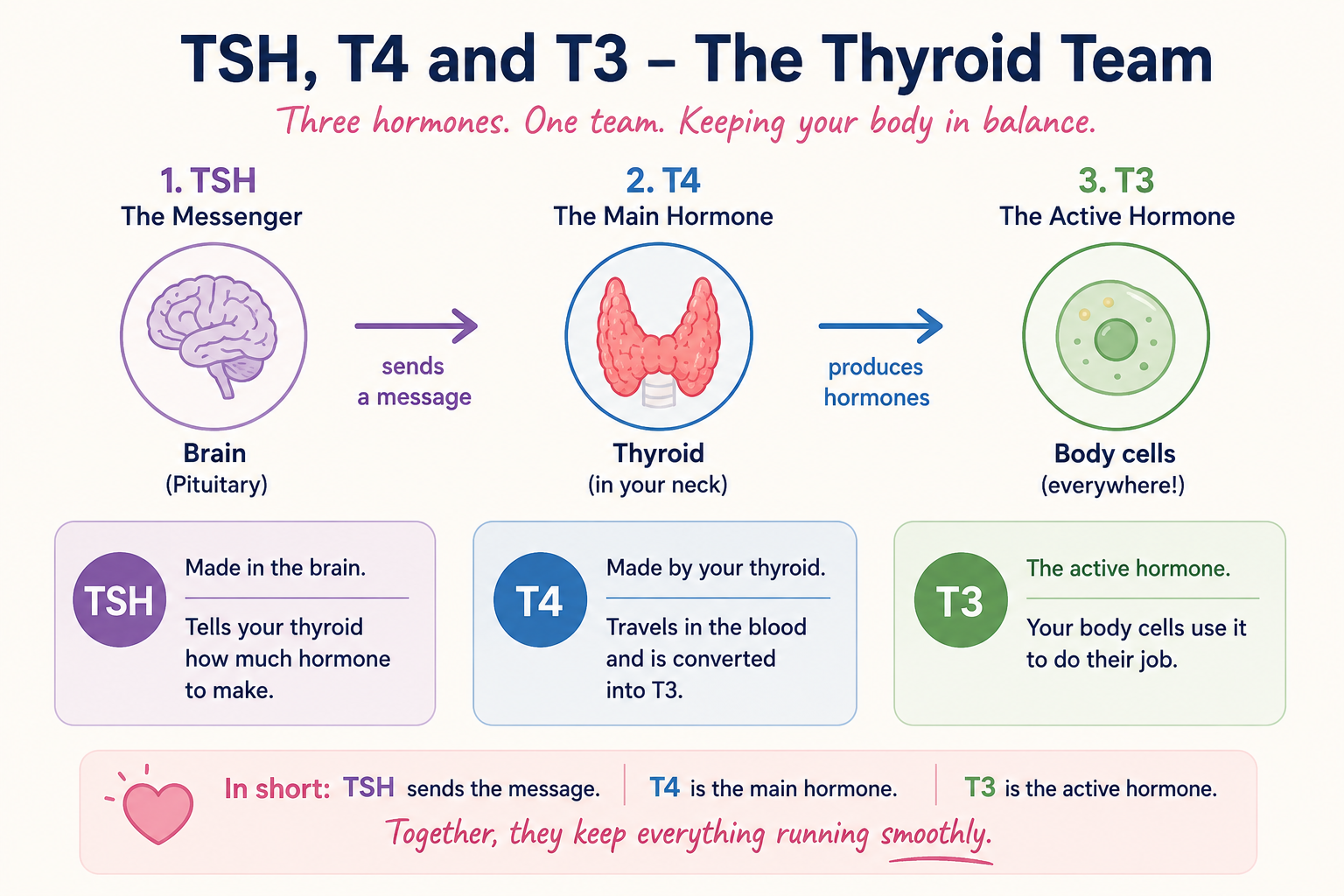
If you're taking levothyroxine for an underactive thyroid, your doctor will usually monitor your thyroid function with blood tests. You'll often hear people talking about TSH, T4 and T3.
TSH (thyroid stimulating hormone) is produced by the pituitary gland and tells your thyroid how hard it needs to work.
Free T4 is the main hormone produced by the thyroid gland.
Free T3 is the active hormone your body's cells use. Despite what social media might have you believe, it isn't routinely measured when investigating an underactive thyroid because, for most women, TSH and Free T4 provide the information needed to assess thyroid function.
One point I'd really like to emphasise is that blood results should never be looked at in isolation. Your doctor isn't simply treating a number on a page. They're looking at your symptoms, your medical history, your medication and your blood tests together. That's why comparing your results with somebody else's in a Facebook group is rarely helpful. We are all wonderfully individual.
Getting the most from thyroid medication
If you take levothyroxine, getting the most from your medication is key.
It's usually best taken first thing in the morning with water on an empty stomach. Calcium, iron and magnesium supplements should generally be taken at least four hours later because they can reduce its absorption.
If your dose is adjusted, remember that it usually takes six to eight weeks before your hormone levels stabilise enough for repeat blood tests. It can feel like a long wait when you're tired and looking for answers, but the thyroid likes to work at its own pace.
What is Hashimoto's thyroiditis?
Many women don't realise that the most common cause of an underactive thyroid in Ireland and the UK is Hashimoto's thyroiditis.
Hashimoto's is an autoimmune condition where the immune system gradually damages the thyroid gland, making it less able to produce thyroid hormone. The treatment is still levothyroxine, but understanding the underlying cause can help explain why the thyroid became underactive in the first place.
Can HRT affect thyroid medication?
It can.
Oral HRT tablets can sometimes affect how much levothyroxine a woman needs because oral oestrogen is processed through the liver and can change the way thyroid hormone is carried in the blood.
If you start or stop oral HRT, your doctor may decide to repeat your thyroid blood tests to make sure your medication is still at the right dose.
This is much less likely with HRT patches, gels or sprays.
What about an overactive thyroid?
Although we've mainly talked about an underactive thyroid, it's worth remembering that an overactive thyroid (hyperthyroidism) can also occur.
Symptoms may include:
Weight loss despite eating normally
A racing heart or palpitations
Feeling hot or sweating more than usual
Anxiety
Difficulty sleeping
Again, you can probably see why it's important not to assume every symptom is menopause.
What does the latest research say?
A recent position statement from the European Menopause and Andropause Society highlighted how much overlap there is between thyroid disease and menopause.
Their advice was simple: don't assume every symptom is menopause but equally don't assume the thyroid is responsible for everything either.
The bottom line
If your thyroid is well controlled and your blood tests are where your doctor wants them to be, you have a much clearer starting point for looking at any symptoms that remain and deciding whether they are more likely to be related to perimenopause or menopause.
The most important message I'd like you to take away is this: don't ignore persistent symptoms, but don't panic either. Work with your doctor, keep asking questions and remember that you know your own body better than anyone else.
Menopause explains a lot—but it doesn't explain everything.